
Bridge to Brisbane
Wishing all the runners a terrific race in the Bridge to Brisbane and congratulations on monies raised for charity! @bridge2brisbane #charity #nonprofit #fundraising
Wishing all the runners a terrific race in the Bridge to Brisbane and congratulations on monies raised for charity! @bridge2brisbane #charity #nonprofit #fundraising
 Charities are dependant on a constituency. Some charities have a built-in constituency and others are not as fortunate to have such a natural constituency. Examples of built-in constituencies include:
 Last week, the Fundraising Institute Australia NSW CFRE Study Group met in preparation for the CFRE exam this spring/early summer. CFRE International certifies experienced fundraising professionals aspiring to the highest standards of ethics, competence and service to the philanthropic sector. A group of individuals in NSW and elsewhere are currently studying together for the exam. During this month’s discussion, we talked about constituencies of our organisations. Those from the Salvation Army talked about the very broad-based constituency of the Salvation Army, including the general public, former recipients of their vast services, and others who are grateful to the Salvos for the superb programming offered. A participant from an area hospital talked about the hospital’s grateful patients and family/friends of patients, which are part of their built-in constituency. She also discussed the fact of members of the general public giving to this great hospital because the hospital offers superior medical service to the community. In one sense, those in the community may not use the hospital, but want to support it because it is in their “back yard”.
Some say that we as fundraisers are more attracted to work for charitable organisations with natural constituencies than we are to work for organisations where a natural constituency is lacking.
What are your charitable organisation’s constituencies? Do you work for an organisation which has a built-in constituency or have you had to work to build a constituency more from scratch? Tell us how you build your constituencies and how you work with existing natural constituencies to increase their level of engagement. Please let me hear from you. Join the conversation below.
An awesome call from a charity. Am I nuts? Whoever says such a thing?!
I received a wonderful telemarketing c all from Seeing Eye Dogs Queensland on Monday evening. I love these calls – especially when the caller provides a good quality experience for the recipient!
This caller identified herself from Apple Marketing Group. She really made me feel appreciated for my past financial support, stated a strong case for support, and encouraged me to give a regular gift and to become a “super” supporter. In the ask, she described the benefits of giving at this level.
You know what else I liked about telemarketing call from Seeing Eye Dogs Queensland? The Apple marketing Group employee did not make me feel uncomfortable, I did not feel pressured, and she respected my time. It was truly a conversation between two individuals – the rare type of telemarketing call from a charity or supplier. In the end, she left me with a very good impression of Seeing Eye Dogs QLD, the organisation’s services, and my ability to make a difference.
The following day, I received another call from an energy company. The caller, hard to understand, had to repeat his pitch to me three times, he made me feel as though I was incompetent because I am using the wrong energy supplier, and I never fully understood his pitch. I ended up telling him to please take me off their list.
Does your organisation monitor your telemarketing agency? Most agencies will allow you to listen in to various calls throughout your programme so you might applaud people like this particular caller and correct issues or misinformation on other calls. Telemarketing is not an inexpensive channel. You owe it to your organisation to monitor calls and to make such monitoring part of your quality assurance.
Cause-related marketing is quite popular in the United States. Examples that come to my mind include the ability to add a donation to my grocery bill at a supermarket chain, corporate contributions to a cancer-related charity when a Boston Red Sox player hits a home run, and a big global bank offering free admission to museumgoers on Mondays of each week. If pressed, I could likely come up with, or surface, hundreds of examples from Boston where I lived prior to moving to Sydney six years ago. Other examples come to mind having travelled to the United Kingdom for business, including the ability to add a charitable contribution to my airline transaction on British Airways’ website.
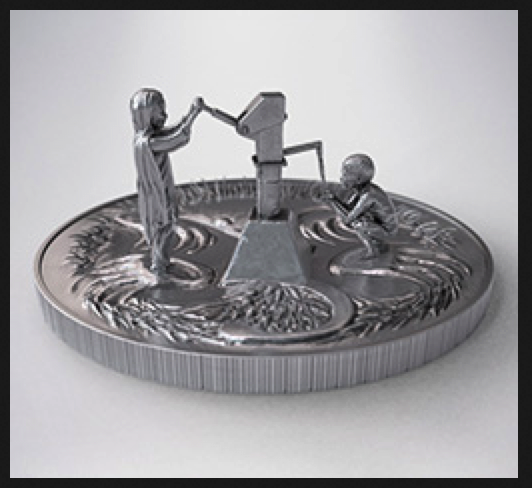 I recently flew from Sydney to Johannesburg South Africa and saw a shining example of cause related marketing, which many of you would have seen prior. Qantas encourages all flyers to give their loose change to UNICEF through its long-standing campaign, Change for Good. Previously, the campaign suggested any loose change and now Qantas has taken this campaign further than in years prior. Qantas now suggests passengers give $6 to provide three 10 litre collapsible water containers, helping communities transport and store their safe water. Other options were also suggested on the overhead announcements. Additionally, the giving envelope also suggests giving your credit card or enclosing a cheque to make a gift. Finally, the giving envelope asks people over 18 to give their name and email address to keep updated on UNICEF’s work.
The Qantas/UNICEF campaign is likely the most visible cause-related marketing effort in Australia. Are there other cause related marketing campaigns in Australia that are of equal value? If so, why don’t they come to mind?
I am not sure how much revenue the Qantas/UNICEF cause marketing campaign has raised in its 21 years of running. But, the visibility Qantas has provided to UNICEF likely is worth gold and it must have translated into good revenue for the charity over time.
Many people know that I have conducted a mystery shopping study in Asia Pacific over the past four years. This study, self-funded, self-guided and self-directed, focuses on the gift giving experience, receipting and acknowledging, follow on solicitations, and other donor care treatments received. I have reported on study findings prior and today I want to discuss the new donor welcome packages part of the study.
 Are new donor welcome packages a thing of the past? I ask this question because less than 2% of the organisations in the study sent me a new donor welcome package. Those received would be rated a 1 out of a possible ten and here is why:
Here are the key ingredients of any new donor welcome package:
Keep the new donor package simple, yet attractive and professional looking.
New donor welcome packages, if produced correctly, offer a host of opportunity to continue to engage the brand new donor or the renewed lapsed donor. New donor welcome packages do not have to be complex nor do they have to be costly to accomplish your engagement goals. So, why do so few organisations in Australia produce new donor welcome packages?
Are you able to recite the progress of fundraising for the year? If asked, do you know exactly where your organisation stands in terms of funds raised to goal, progress within each fundraising program, and other critical key performance indicators (KPIs)?
My experience is that some staff of nonprofit organisations are unable to, if pressed, offer the status of their fundraising programs and state the overall fundraising progress in their organisation. As fundraisers, we live and die by numbers. We ought to know, at any given point in time, exactly where we are in fundraising income and fundraising expenses and we ought to monitor progress and issues through fundraising reporting.
Why is it that some fundrais ing staff are unable to readily state fundraising statistics when asked? Here are a few reasons commonly stated:
Each reason given above is filled with a host of issues behind the scenes. As fundraising managers, we owe it to our organisation and to our staff to conduct a reports analysis session or workshop. This workshop will create change across the organisation so the organisation becomes data-driven instead of excuse-driven. The workshop will lead your organisation to create a suite of reports – some standard reports in your CRM, others customised for your organisation – which can be available each month (or on demand) and available at your fundraiser’s fingertips. Standardised reporting will lead to data cleansing, data standards, and a renewed focus on the fundraising numbers rather than on the distrust or lack of confidence that often times exists across organisations.
 Having worked and consulted with hundreds and hundreds of non-profit organisations worldwide, one of the biggest challenges I have witnessed is staff turnover. In some organisations, staff turnover in a year might amount to 40%+. This is a problem not just in non-profit organisations, but with suppliers in our market as well.
Why might staff leave your organisation? Most staff leave because of 1 (or more) of these 5 reasons:
Investing in your staff will pay multiple dividends. Investing in the professional development of staff will increase staff retention and do so much more, in return, for your organisation.
Some managers suggest investing in staff carries too high a risk because those staff may leave anyway. So, why pay for conferences, courses or memberships in professional organisations if the staff may not be with your organisation for the long-term?
As managers, we need to provide professional development for our staff. Professional development is a right for staff, not a privilege.
Where do you turn to come up with professional development investment opportunities for your staff? Sometimes the answer is right in front of us. In this case the answer is in our own backyard.
Fundraising Institute Australia has a wide variety of professional development opportunities, including those in early, intermediate, and advanced career. Consider Essentials for Fundraisers, Certificate in Fundraising, Fundraising Management Diploma, and Executive Fundraising Leadership. Look at the FIA short courses, including Copywriting for Fundraisers, Creative for Fundraisers, Database Analytics for Fundraisers, and more. Additionally, offer staff the opportunity to look at attending the FIA Conference, scheduled for 18-20 February in Brisbane. Allow staff to get involved in FIA in your state and to attend their monthly meetings. Encourage staff to get involved as a mentee in the FIA mentoring program.
FIA offers a host of opportunities at your fingertips, yet these opportunities require managers to actively encourage their staff to participate. Staff should feel welcome to take advantage of these opportunities. Managers need to open the door to FIA membership, FIA education courses, and the FIA Conference. Push staff to get involved in their profession as a volunteer. Doing so will strengthen your organisation, strengthen the fundraising profession, and foster growth in the individual staff. Doing so, may very well be one of your top staff retention strategies for the year.
Scenario – a donor sends a gift using a coupon from the 2010 Christmas Appeal. This same donor surely received the 2014 Tax Appeal in May 2014. Should your organisation credit the 2010 Christmas Appeal or the 2014 Tax Appeal?
What do you think?
Organisations differ when faced with this question. Some staffs argue the donor meant to respond to the 2014 Tax Appeal and the donor is simply using an old response device. Others argue that the 2010 Christmas Appeal should receive the credit despite the donor having received the 2014 Tax Appeal.
I believe the appeal the donor is responding to should get the credit even if the appeal is no longer active in your CRM and even though the donor has responded to a historical appeal.
Why?
To assume the donor meant to respond to the 2014 Tax Appeal is trying to second guess the donor’s intent when, in fact, the donor intended to respond to the 2010 Christmas Appeal using the particular coupon and the donor, in fact, took that very action.
Second, you do not know the donor received the 2014 Tax Appeal. Perhaps the appeal is lost on its way to the donor or was never received by the donor at all. However, you do know the donor received the 2010 Christmas Appeal because this is the response device used to make the gift. Staff cannot get in the minds of the donor and cannot pretend to be the donor’s mind.
Why do staffs try to act on behalf of the donor? Why is this debate held at many organisations in the first place? Staff are usually concerned about results for the open or current appeal and do not care about results from appeals in the past. Given turnover in organisations, current staff may not have been employed by the organisation when the historical appeals were active. Nonetheless, it skews results to not credit the appeal the donor responded to no matter how old the response device may be.
Putting the donor’s intent first is always the best practice.
I moved in April of this year. It is now nearly August. I am surprised not a single non-profit organisation – school, university, cultural, environmental, health, medical research, or other type of organisation, has found where I now live. If it were not for Australia Post’s mail redirection service, I would have lost contact with every organisation I support.
Millions of Australians move each year. Few, only on rare occasions, take the time to tell the charities they support of their move. Charities are the last to learn someone has moved. Most individuals will not inform the charity through a proactive channel – a call, email or some other communication.
So, where does this leave the charity? In the dark unless the charity actively searches for constituents who have moved and seeks new contact details.
When I signed up for the Australia Post mail redirection service prior to the move, I was given the option to opt in, to allow, or opt out, to not allow, Australia Post to pass along my new address to for profit and non-profit organisations (including charities I support). This works only if I opted in and if those charitable organisations seek the new details. The important point here – if a charity does not ask for the information from a supplier in the marketplace, the charity does not receive the information.
After three months, none of the more than 180 charities I support seem to have engaged with a supplier to seek new contact details for any constituent who has moved over the last quarter. How do I know this to be true? Every piece that has reached me at my new address has arrived due to the Australia Post Mail redirection service and not directly with my new details.
Ask a few questions in your office today:
The benefits of data cleansing are many, including:
The cost to acquire a new donor is high. Why risk losing the donor simply because the donor has moved and not informed the charity through direct means of the move. Donors and prospects who once heard from your organisation and no longer receive communications, solicitations, or donor care pieces will think you no longer are interested in a relationship. In fact, you are interested it is simply you do not know their contact details.
Data enhancement. Learn:
What happens in an address hygiene process? Your addresses are structure to meet Australia Post standards, i.e. apartment numbers are placed in the proper position and street, avenue, Lane and others are abbreviated, etc. A Delivery Point Identifier (DPID) number is assigned (a unique identifier assigned to each of our households). The data will be matched with the Australia Post Postal Address File (PAF) and other consumer files to return not only new addresses, but enhanced data.
Think about the return on investment in data cleansing. There will be some upfront costs for supplier(s) and data acquired. Nonetheless, those upfront costs will be minor compared to monies saved and donations received. The investment will pay multiple dividends.
Where do you begin? Find a supplier in the market who has the expertise to take you through the entire process and who understands the data you should acquire. FundraisingForce is one such supplier working with data hygiene partners with years of experience in this space. Together, we will assist your organisation to achieve better results and reach constituents who have moved like millions of others this year.
Your spring appeal and Christmas appeal are just around the corner. Take the time now to invest in the file, to cleanse it, and to prepare for the best appeal season possible.
 Both non-profits and suppliers in the non-profit marketplace must deliver solid customer service. If a charity does not deliver a high level of customer service, the likelihood of the charity retaining their donors is nil. Likewise, if suppliers do not deliver a high level of customer service, the likelihood of retaining the charity customer is the same.
Customer service failures are easily identifiable. Think about a time when you became agitated with a company you were dealing as a consumer. Was it an airline, an online store, a retailer, a hotel, or a restaurant? What got your blood pressure up? How could this have been prevented?
You and I do not put up with poor customer service as consumers. If we receive poor customer service, we likely complain directly to the supplier via letter, email, phone, or, even, Twitter and other more public channels. In our sector, why would donors put up with a charity and why would non-profits put up with suppliers who are not on top of their customer service game?
What must each of us do to ensure those things do not occur in our organisation or business?
Good customer service begins at home. Your team – whether in a charity or supplier – need to consider their work colleagues to be their customers. We need to be responsive of one another in meetings, email, and other forums. A positive atmosphere is infectious, as is a poisonous atmosphere.
When customer service is delivered to one another, it spreads to our external customers – donors or charities.
Turnaround time. We should expect to hear back from one another within a business day when there is not a holiday or sick leave situation. When a day’s turnaround time is not possible, set expectations with the “customer”. Be clear about length of time and, perhaps, reasons why it may take you a bit longer. Keep the consumer informed about your progress.
Gift entry/acknowledgement. Charities should be responsive to donors when a contribution is received. How does your organisation measure up? You don’t know? You should. Processing a gift and returning a receipt/acknowledgement within 48 hours is critical. I have said it before. You and I cannot control the amount of time it takes Australia Post to get the donation to the charity. Likewise, we cannot control the amount of time it takes Post to get the thank you letter to the donor. Therefore, we must control the length of time the gift is in our custody.
Processing time must be measured, goals set, and KPIs monitored.
Friendly, upbeat greetings. Whoever is on the telephone or greets visitors to your organisation needs to be friendly and upbeat at all times and no matter the distractions. Remember the old saying that you do not get a second chance to make a first impression? Use that rule at the reception desk.
Do Not. As a member of a team, you cannot blame others for not being able to respond in a reasonable time frame. Additionally, do not tell people you are “flat out” and cannot complete their task. Doing so makes it seem like you believe they, too, are not busy. We are all busy. And, doing so also diminishes the importance of their task!
Absence won’t make the heart grow fonder. Be sure to have constant coverage and even during holiday and sick periods. Do not assume your donors or customers will understand and will simply wait for their key contact to return. Set out of office messages on the phone and email systems.
The hard stuff. Having difficulty accomplishing the hard stuff should not prevent us from delivering good customer service and it should not prevent us from accomplishing the day-to-day, more routine, items. If a donor or a customer, in the case of a suppler, asks something that cannot quickly be answered or, perhaps will require a bit of research, set clear expectations about the timeline it might take to get an answer.
Under promise and over deliver.
Good customer service levels do not have to be difficult to achieve. Start at home; repeat it to your external audiences; set metrics for turnaround time; ensure friendly and upbeat atmosphere at the point of reception; do not blame others and do not use the “flat out” excuse; fill gaps in staffing during holiday and sick periods; and don’t let the hard stuff get in the way of the more routine items.
Make this the year of customer service. Following these simple tasks will let you, as a non-profit or a supplier in our space, shine throughout the year.