
Recurring Gifts: How Charities Use Anniversary Uplifts
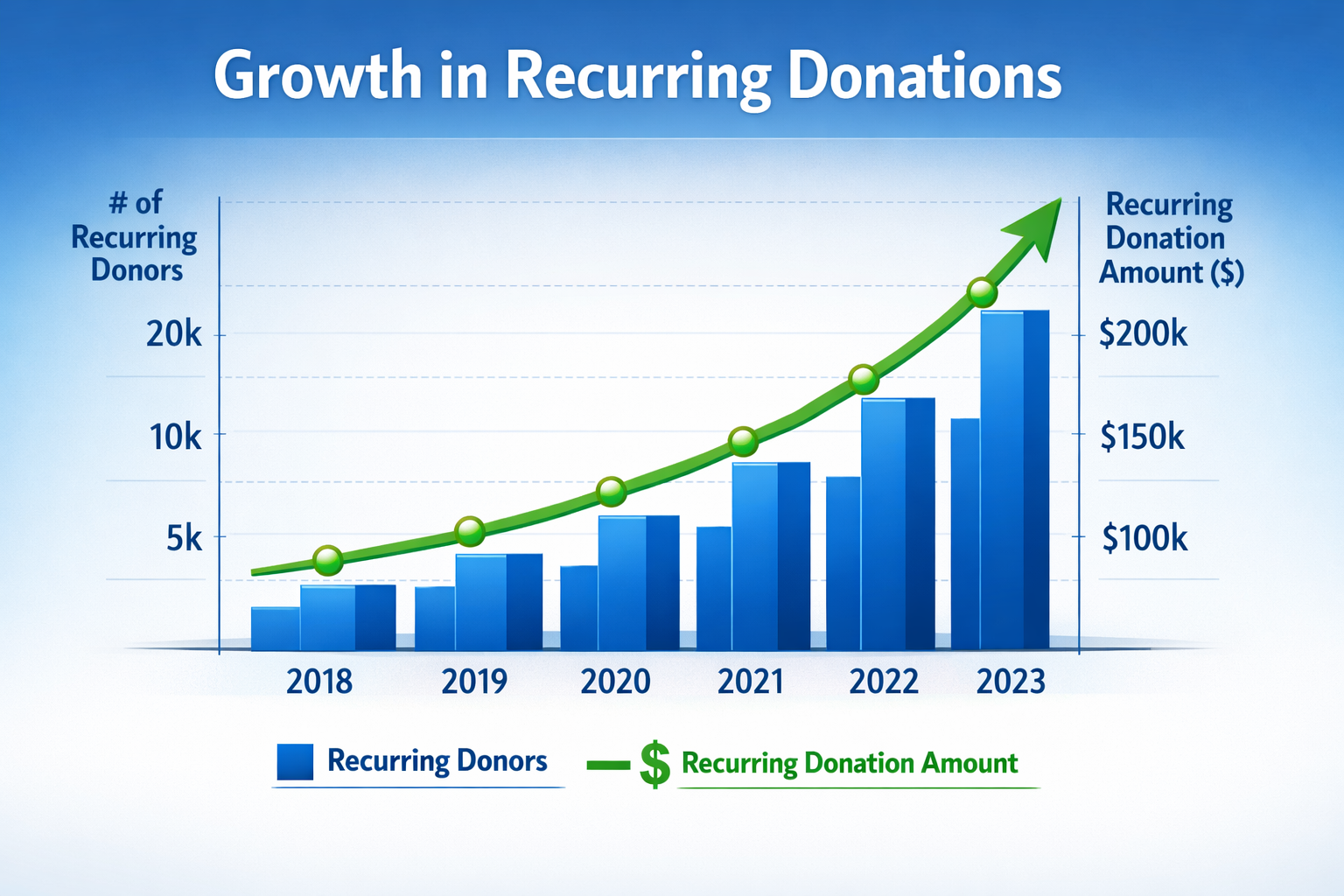
Recurring gifts have always been the backbone of reliable fundraising. What’s changed is how charities are systematically increasing the value of those gifts—often on the anniversary of the donor’s first commitment—without endless manual work or awkward asks.
Done properly, anniversary uplifts of recurring gifts feel routine, sensible, and fair. Done poorly, they feel sneaky. The organisations getting this right respect donor intent, lean on automation, and let good process do the heavy lifting.
Here’s how it actually works in practice.
1. The “Anniversary Adjustment” Model (Opt-Out, Not Opt-In)
The most effective approach is simple and unapologetically grown-up:
- On the 12-month anniversary of a recurring gift, the donation increases by a modest, pre-communicated amount (for example, +$2 or +5%).
- Donors are notified in advance, clearly and plainly.
- They are given a clear, easy opt-out.
Why it works:
- Most donors don’t bother opting out.
- The increase feels reasonable—often framed as inflation, rising costs, or expanded services.
- Over time, this compounds into serious revenue.
This is not about tricking donors. It’s about setting a default that reflects reality: costs go up, and loyal donors generally understand that.
2. Percentage-Based Increases Instead of Flat Dollar Lifts
More sophisticated charities avoid flat upgrades and instead apply percentage increases:
- 3–7% annually
- Rounded to avoid awkward amounts
- Applied automatically unless declined
This mirrors how:
- Membership fees work
- Utilities adjust pricing
- Salaries are indexed
It positions the charity as a well-run organisation, not a tin-shaker.
3. Advance Notice Emails That Do the Work for You
The automation is only half the story. The messaging matters.
High-performing charities send:
- A 30-day advance notice email
- Written in plain language
- With a clear “manage my gift” link
Key elements:
- Acknowledge loyalty (“You’ve been giving for a year—thank you”)
- Explain the increase succinctly
- Reinforce impact (“This helps us do X for Y”)
- Make opting out painless (which paradoxically increases trust)
No drama. No begging. No guilt.
4. Donor-Controlled Dashboards That Encourage Self-Upgrades
Modern donation platforms increasingly allow donors to:
- Log in
- See the impact of their giving
- Adjust amounts themselves
Charities quietly prompt this behaviour around anniversaries by:
- Showing suggested upgraded amounts
- Highlighting what a small increase achieves
- Pre-selecting the “recommended” option
This shifts the psychology from being asked to choosing to step up—a far more durable outcome.
5. Inflation Framing (Because Adults Understand Economics)
The best charities don’t pretend costs are static.
They explicitly say:
- “Like everything else, our costs increase each year”
- “We adjust regular gifts slightly to keep pace”
This works because:
- It’s honest
- It mirrors donors’ lived experience
- It avoids emotional manipulation
Donors who don’t agree can opt out. Most don’t.
6. Segmenting Who Gets an Automatic Increase (and Who Doesn’t)
Not every donor should be treated the same.
Smart segmentation excludes:
- Donors who recently upgraded
- Donors on fixed incomes (where known)
- New regular givers under 6–9 months
- Lapsed or reactivated donors still re-establishing trust
Automation doesn’t mean indiscriminate. It means rules-based discipline.
7. Testing Before Rolling It Out Broadly
Charities that know what they’re doing:
- Pilot anniversary increases with a small cohort
- Measure opt-out rates, complaints, attrition
- Adjust the uplift amount accordingly
Most are surprised by how low resistance actually is when the approach is transparent and respectful.
Not a Gimmick
Automatic anniversary increases of recurring gifts are not a gimmick. They are a modern extension of traditional stewardship, made scalable through technology.
Charities that cling to manual, one-off upgrade asks leave real money on the table. Those that embrace structured, donor-first automation build stronger, more sustainable revenue—without burning goodwill.
The rule is simple:
Be clear. Be fair. Be professional.
Donors will reward you for it.
